Artificial intelligence: “From ruleset to mindset” – the (un)digital freedom of a Christian...
Are you still AI or already KO? Every day we make thousands of decisions, more or less automatically, starting with what to wear. There are already apps on my smartphone for all of that, supported by processed data sets such as a fairly accurate weather forecast. Trainers or wellies today? How practical. I talked to Swanhild Brenneke (media magazine PRO) about the opportunities but also the risks of using artificial intelligence. And about the topic close to our hearts: what role can Christian faith play here, for example as a counterpoint to fantasies of omnipotence, all the way to transhumanism? Spooky? Listen for yourselves. And write your opinion in the comments.
Listen to this episode
Also on: Spotify · Apple Podcasts · podcast.de
Rarely has there been so much uncertainty in the system! And that despite predictive analytics. From a human point of view. That is the decision with greater consequences: for or against a particular surgical procedure, a new job, a new partner. And the question for me as a human being is how I deal with this uncertainty. I find answers to that in the Christian faith, mainly in the double commandment of love: besides the sometimes distant God and the all-too-close neighbour, also loving and accepting ourselves as we are – as I believe – created by God. I think the Christian perspective should start with the mindset of the people who code, programme and design. That then also has an impact on the software’s rule set, of that I am convinced!
The reformer Martin Luther already grappled intensively with the freedom of a Christian. And I too can benefit from these questions, from the different perspectives of the user. What shapes me? What frees me, what weighs on me, where might I be patronised by machine-supported decisions?
“The concept of freedom is hugely important to me”
Jan Thomas Otte
Some aspects of AI make me uneasy. In credit financing – a kind of intelligent SCHUFA credit check – and in human resources with recruiting robots, there are already many use cases. Here I see the trend towards ever greater efficiency and stronger risk minimisation. All of this serves capitalist principles that we serve every day at work – or at least think we have to. On top of that comes our own laziness: in future we will question less seriously the information and statistics delivered to us via ChatGPT.
A supposedly perfect world, dystopian moments
Transhumanists are all too fond of painting a perfect world. Here I find that, coming from the Christian religion, we can set a counterpoint. Without having to resort to all-too-terrible Hollywood films with shocking, dystopian moments. Perhaps it would be interesting to write a third creation story. Alongside the first, which is aimed at the cosmos. And the second, which takes a comprehensive view of human beings with all their moments of transience and weaknesses, but also their strengths and potential. What would come then?
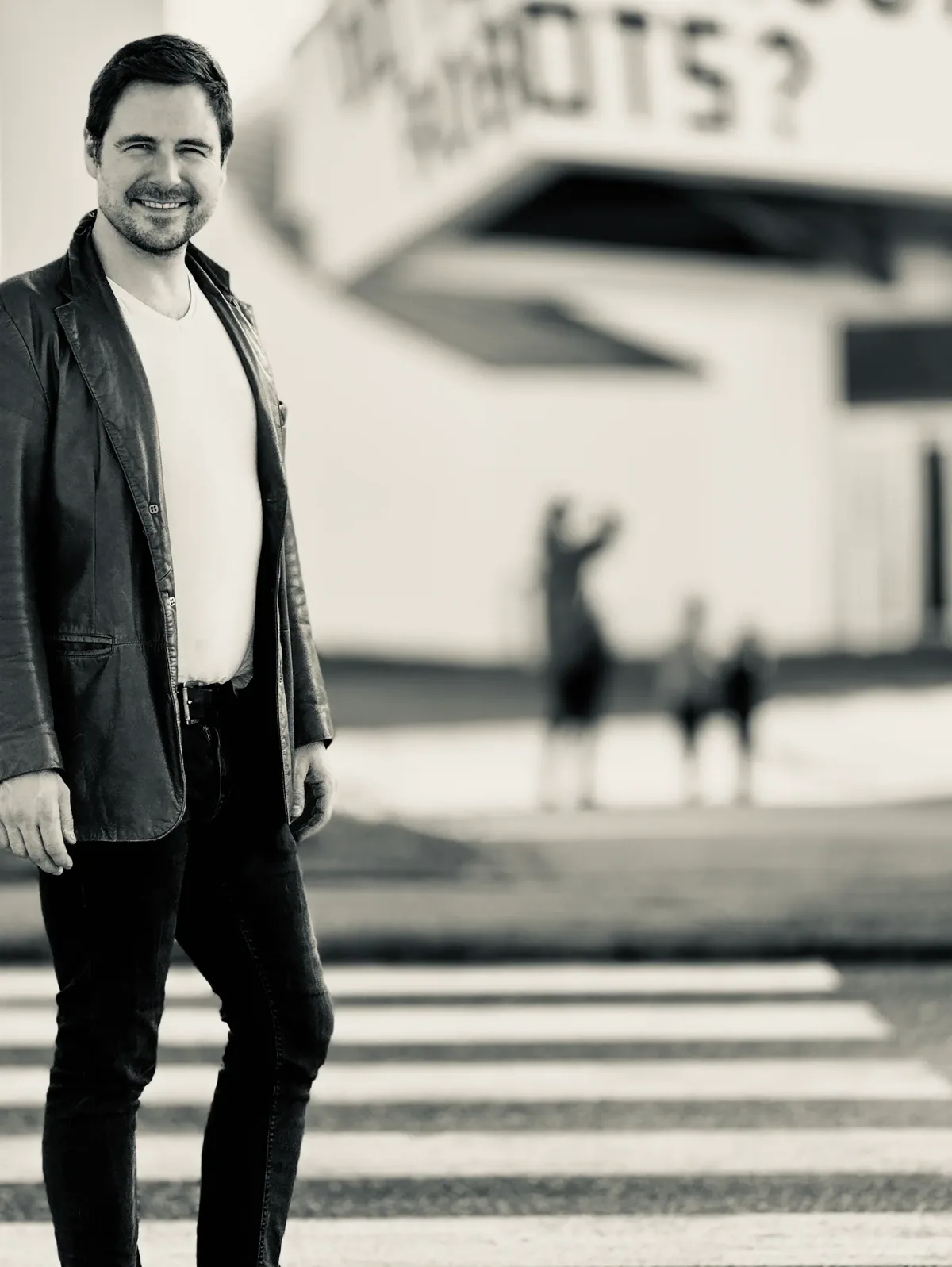
Because every form of artificial intelligence also begins with this if-then structure. And since the beginning of their existence, humans have striven for higher things – see the Tower of Babel in the ancient story, the myth in the Old Testament. All of this is fascinating and frightening at the same time.
Jan Thomas Otte, tech theologian & digital ethicist at "Hello, Robot", design between human and machine, an exhibition at the Vitra Design Museum in Weil am Rhein (photo: private/ NN)
Keeping strengths and weaknesses
Imagine the following situation: you are a Python programmer and wake up one day as the ultimate god of technology. Do you keep sharing? Or do you keep all the new knowledge to yourself? Will you change the suffering in the world for all people at a stroke, or attach conditions – to the size of their wallet, a particular political conviction or religious affiliation, and other parameters? That would certainly make an exciting design thinking workshop! Long story short.
We could spend hours enthusing about everything these new AI tools can do. I like to get to the point: the ethical question of whether I want to use these achievements – and if so, to what degree – in specific use cases in my daily business. We will not get around prohibitions, analogous to the supervisory authorities and regulations in health and finance that we have long had here in Germany and the EU.
State regulation is overdue
In deontological ethics and in impact assessment, we have made progress. ChatGPT, for example, refuses to insult people. When asked, the system states that it has been programmed that way. Beyond that, there is no generally understandable, comprehensible and transparent disclosure of the source code at this point, despite foundations’ efforts towards open source. There is still some catching up to do. But I am convinced that we as human beings have this in our hands and will get there.
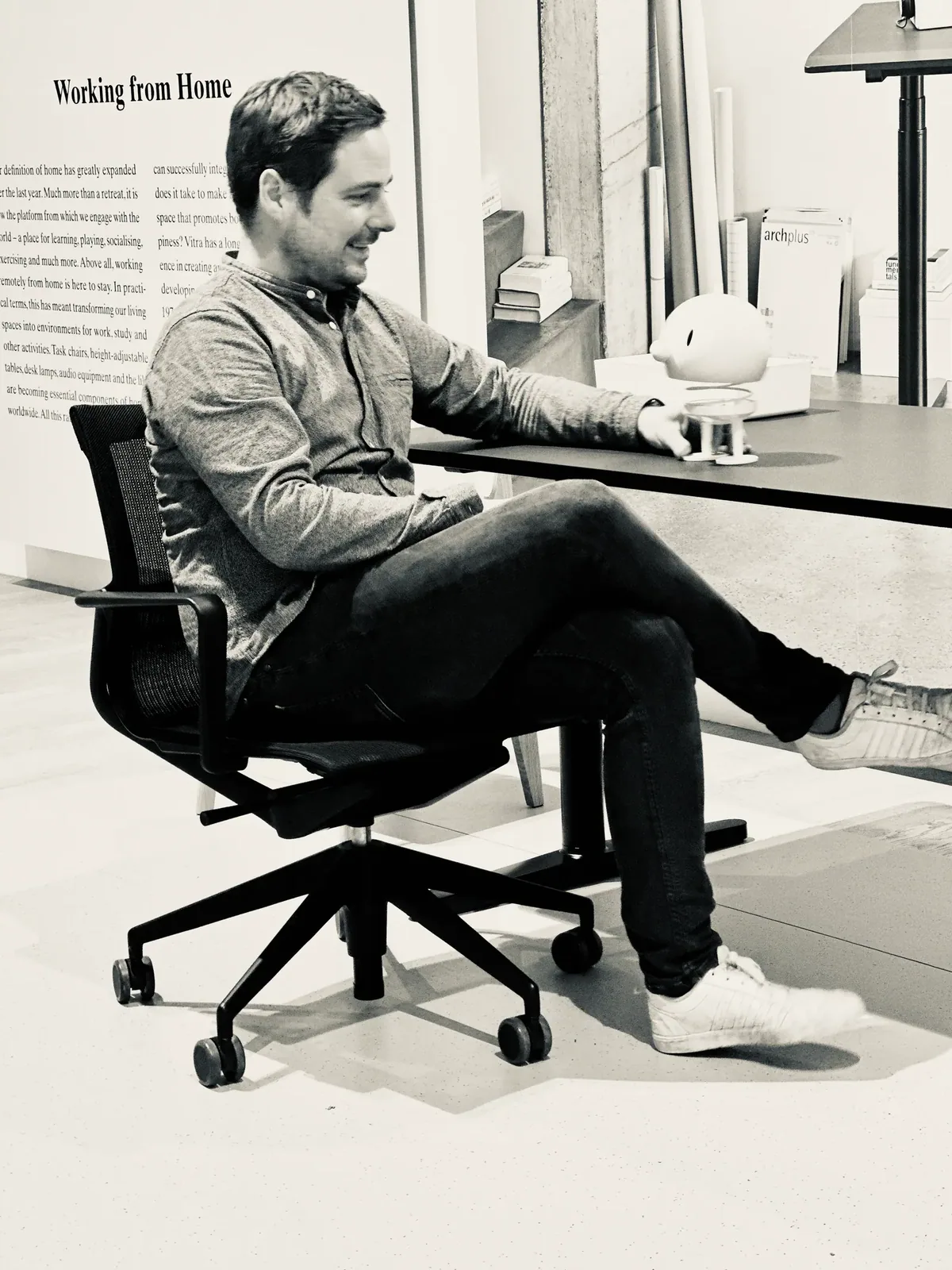
A current advertising campaign by Facebook’s parent company, Meta, is striking. They advertise augmented reality and – as a company that, given the evidence of various data protection scandals, deserves little trust – use of all things the professional group we statistically trust most: firefighters. It is a well-known principle that this is bound to create new fears. Benefiting from it requires me to fit my house completely with sensors, such as those already built into vacuum cleaners, fridges and wristwatches. You have to want that! And not all approaches to making our world better and safer are virtuous.
Jan Thomas Otte, tech theologian & digital ethicist at "Hello, Robot", design between human and machine, an exhibition at the Vitra Design Museum in Weil am Rhein (photo: private/ NN)
Christian virtues “up to date”
I still see great potential in virtue ethics! Concepts such as truthfulness, mercy and a more dignified way of dealing with human weakness and transience. What I have in mind is developing a fear-free approach to high tech. At least that is my concern in my courses, where I accompany managers on their way into the thoroughly digitalised job market of the future. As a “tech theologian”, I give them tools that make them fit not only digitally but also ethically – as the data scientists and agile coaches of the new era. Interested? More about my programme at Digethic, Germany’s first business school for digital ethics, here.
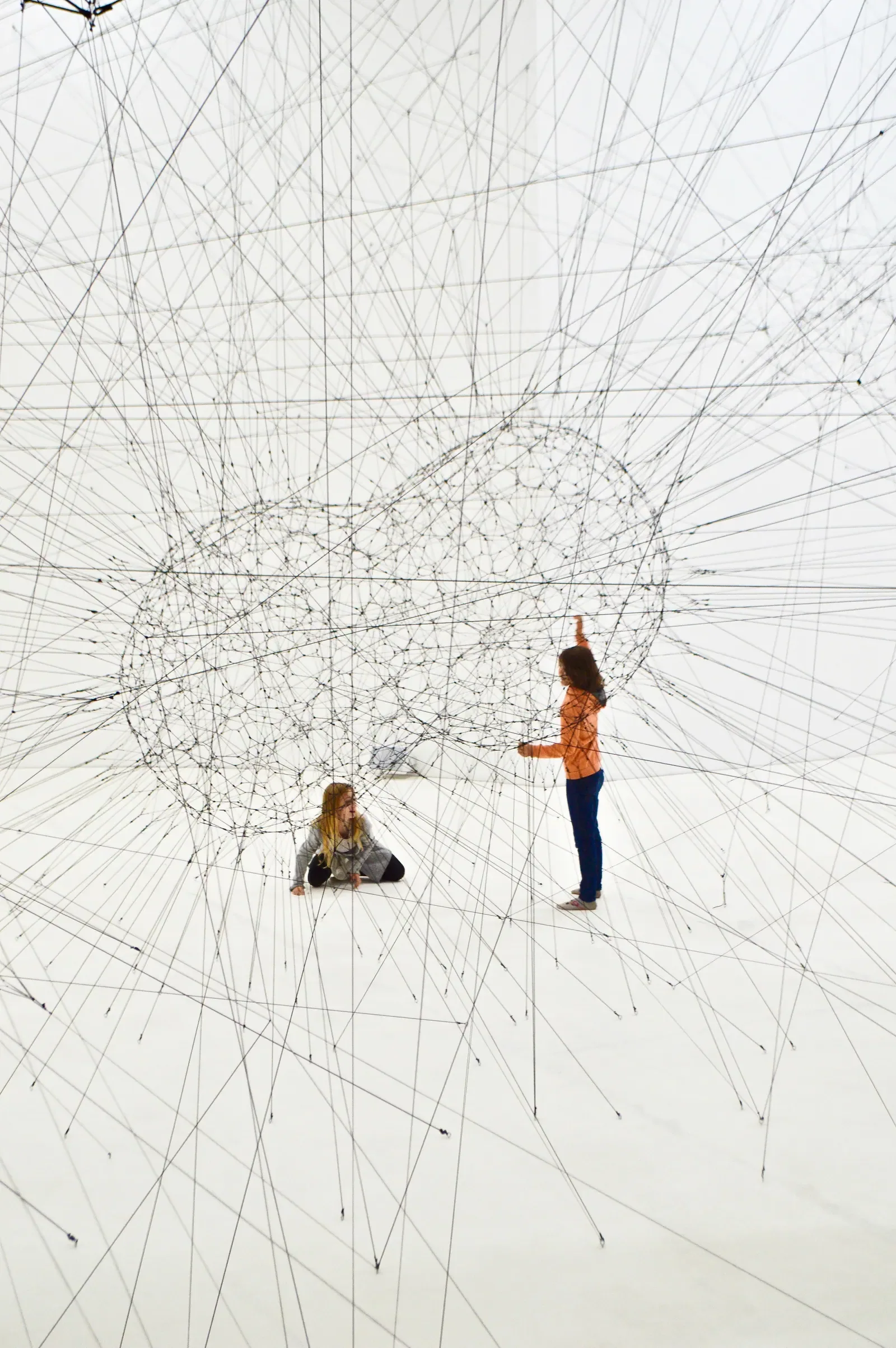
Cover image: Clarisse Croset/ Unsplash
Translated from German by Claude. The episode audio is in German. Read the original in German.