Agile project management: On higher mathematics and meditation
Creativity and stamina help. But we also need knowledge of algorithms for artificial intelligence, mathematical foundations and other approaches such as design thinking and further methods. A conversation with Peter Klausmann.
Listen to this episode
Also on: Spotify · Apple Podcasts · podcast.de
We quickly get bogged down in project and business plans, new IT structures and agile processes. I talked to Dr Peter Klausmann about the processes of change that are needed. The conclusion from requirements engineering, or requirements management: “Be your own change”.
For him, flexibility and focus are not empty words. He sees them as a basic principle of life and wants to find out what holds the world together at its core, how it works. I talked to the engineer, who holds a doctorate, about higher mathematics, mindfulness for opportunities and meditation. And about what all of this has to do with digital ethics and sustainability.
Jan: Dear Peter, we got to know each other on a joint project day that we ran at Digethic, Germany’s first business school for digital ethics. Your unbridled enthusiasm for Kanban boards impressed me straight away. And the way you combine the infinite breadth of religion with very concrete, practical project management…
Peter: My mathematics degree was also very much about infinity. And degrees of finiteness. I was brought up Catholic and studied philosophy for a few semesters. Trying to understand how the world works runs like a common thread through my life. It accompanies me in all kinds of activities, including mountaineering and climbing.
Jan: Straight to the crucial question, then. Where do you stand on religion? For you, religion is…
Religion: not believed but practised
Peter: I am increasingly coming to the realisation that religion is not something you should primarily believe but above all practise. And train, a bit like sport. If I want to train for a marathon, I will not build the muscles for it just by buying books or watching sport on TV. So, via a few detours, I ended up with Zen Buddhism; I practise twice a week in Karlsruhe. And I regularly go to a monastery.
Jan: I like the way you first of all perceive reality at all. I think this dimension of religious experience is incredibly valuable. And then you structure and classify it for yourself, process it and try to understand it, to find the derivation as in mathematics. Or the IPO principle from computer science, from input via processing to output. In the end, these are equations, ways of calculating, of interpreting lived reality.

Peter: After all, we are both experts in processes of change...
Jan: I am noticing that strongly in the church right now as well. The understanding of membership in the institution is changing, people are leaving. But that does not automatically make them less religious. Quite the opposite! They are simply looking for new offerings and alternative concepts. And for the odd digital business model in the midst of change – your speciality…
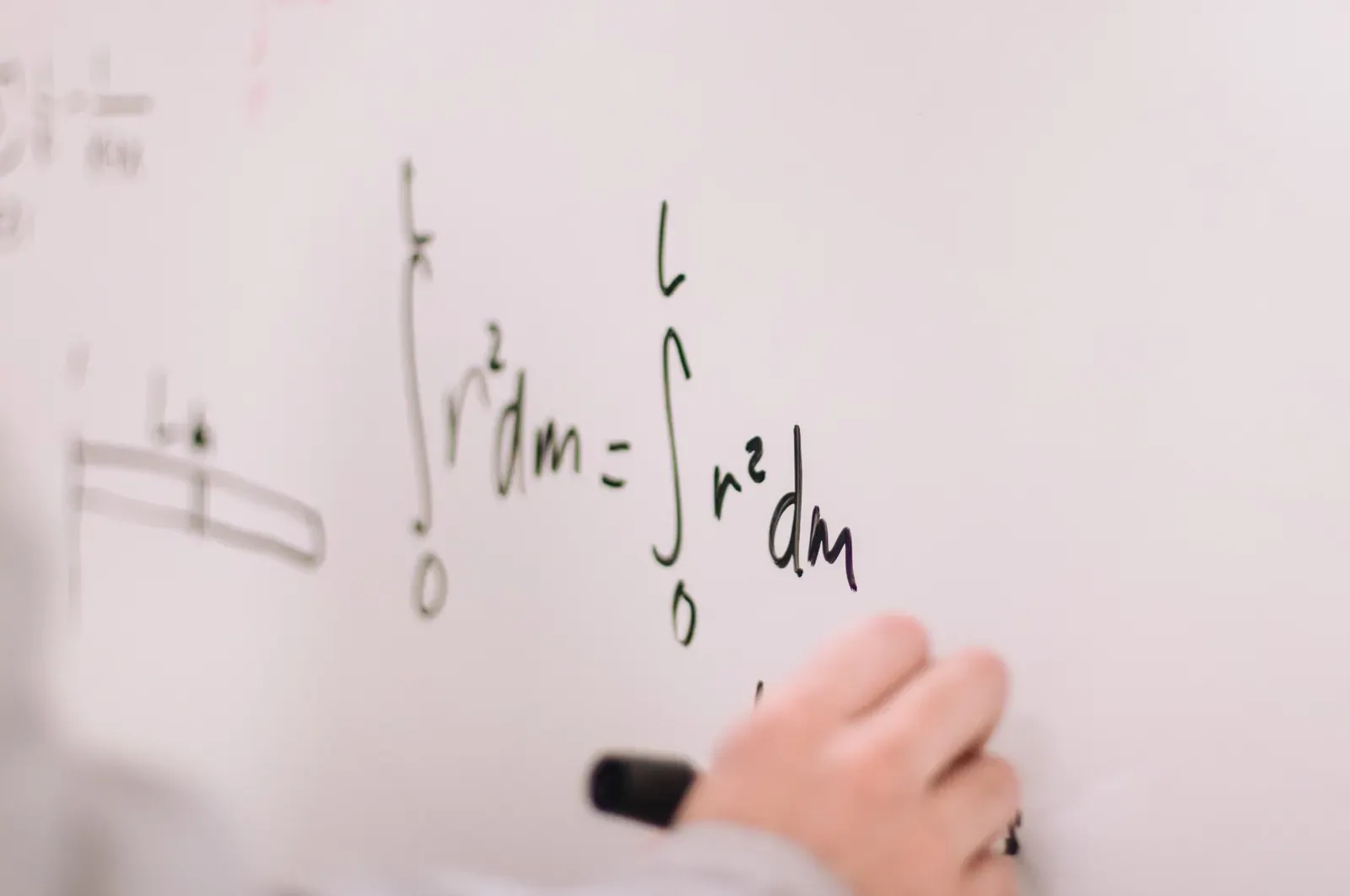
First, simply perceive reality · Stock photo · Photo: Aleksandr Eremin / Unsplash
Peter: Even though I know it, I am surprised again and again at how fast-moving the world we live in is. But the ancient Greeks and the Buddha already understood that change is part of our nature. Everything flows. And the fact that we humans do not particularly like change at first is, of course, old news.
Jan: For entrepreneurs, the point now is...
Processes of change: focus on the here and now
Peter: ... to shape this change and somehow deal with it. To stay focused. In the here and now, in change management. Focus is an important value, especially in the agile field. And then to make the best of it. We have many risks, but also many opportunities with the new technologies. Let us just see!
Jan: From one job to the next, with coronavirus accelerating digitalisation. As a pastor, I talk a lot with people who are terribly afraid of change and of all the consequences that clever algorithms and so-called artificial intelligence bring with them. Have you actually mastered “digital detox”?
Peter: Officially, emails are taboo in the monastery, and you have to walk quite a while to get mobile reception. As an entrepreneur, I just make sure everything is running and take a paranoid look every now and then. Otherwise you are kept busy there with meditation, cooking or chopping wood. That leaves little time for digital technology…
Jan: Let us look at the background we have right now: transformation. The United Nations’ Sustainable Development Goals, the year 2030. A lot is supposed to happen by then. I distinguish between the micro level, that is me. The macro level, that is you and the organisation. And the macro level, the big “we”, the whole, the globe, where everything comes together.
In the monastery, emails are off-limits · Stock photo · Photo: Pix Tresa / Unsplash
Dare to take the first step. The main thing is to get moving instead of putting everything off
Jan Otte
Peter: Your goal in courses on digital ethics?
Jan: To encourage participants to get started, even imperfectly. To dare to take the first step. The main thing is to get moving instead of putting everything off. And the half-life of knowledge in the digital age is shrinking so fast. Beyond Kanban boards, tools and processes, what would you like to give your participants to take away?
Ideas management: the bottleneck is capacity to implement
Peter: Basically exactly the same. Here, too, to start with change. The bottleneck is usually not the idea. I have never come across a company that did not have enough ideas. Innovation projects usually fail because of something else, namely the capacity to implement them.
Jan: Hence design thinking for the start, a minimum viable product for the start-up in order to...
Peter: ... go to the customer as quickly as possible and deliver the first benefit, even if the product is not yet completely perfect. Perfectionism comes later. If the product is successful, it can be developed iteratively. And if it does not take off, at least you have not sunk so much money into it and can turn to new ideas, feeling your way forward.
Jan: MVPs are cool! Everyone is pleased to hold something in their hands that is not just talked to death in endless meetings. What matters is that it is loved. Two examples of keeping the handbrake on. A course participant who works in the public administration of a large German city reports that her boss went to an agile workshop. He moved meetings lasting several hours from sitting to standing. That is something, at least. With the same amount of time.

Peter: Oh dear!
Jan: And I think of one of my last IT projects in the insurance sector, large turnover, many people involved in the processes and many stakeholders. My client wanted an agile set-up – combined with zero tolerance for errors. Which moments at the human-machine interface have made you smile…
Agile means having something in hand early · Stock photo · Photo: Redd Francisco / Unsplash
Peter: I do a lot of agile project management. For me it is not so much about supplying people with lots of methods. I want to inspire them to become active themselves and to develop new thoughts of their own. And all of it based on values, such as respect. How can these values be brought to life so that they do not float esoterically in the air?
"Lessons-learned session after a completed project"
Peter Klausmann
Jan: For me, values are esoteric when I cannot place them, cannot comprehend them. Cultural change, transformation – the same applies to them. Experiences that shape culture can help. We come from a certain culture, have been socialised, have previous professional experience. And now the task is to enrich it – beyond a lessons-learned session after a completed project.
Peter: Most people do not like change, and for good reason. The world is changing and we have to take the world as it is. Anyone who does not keep their foot on the accelerator will be left behind at some point.
High speed: on accelerating and easing off
Jan: I also teach at school, lower and upper secondary. And I ask my students whether they have already done anything in the direction of media education. Mostly I look into big, blank faces. Somehow ethics is not part of computer science. And so far digital topics have been only a small part of ethics and religious education. We both live in the same federal state, which has written high tech and innovation on its banner as “The Länd”…
Peter: So far, too much has been invested in motorways, coal-fired power stations and other infrastructure. Education comes after that, from the equipment of schools and the missing Wi-Fi connection to the crumbling plaster on the ceiling. But that is of course also down to endlessly long committees, where everyone somehow wants to have a say. And then it naturally takes longer. And parents have certainly not become less complicated towards teachers either.
Jan: One thing that has certainly not become easier either is leading digitally, digital leadership. Here, too, an anecdote from my professional experience. A middle manager complains that he does not have enough “grip” on his staff, that everyone could somehow do what they wanted…
Leading people, even without a firm "grip"
Peter: I would first congratulate this boss on his independent staff. After all, they are not his personal servants. They contribute their own ideas to the success of a project. I have a different understanding of leadership: “servant leadership”. The manager as a role model who steps into the breach, rather than chasing people out of the trenches. “Command and control”l is a thing of the past! Driving people ahead of you with a whip no longer works today; that needs an update in how we see people…
Jan: On my laptop I press the following key combination: CTRL + V for “Vorbild”, role model. Who or what is your role model, dear Peter?
Peter: I do not have a big name I could pull out of a hat. Certainly not an exalted messiah like Steve Jobs…
Jan: What matters is that you, as a project lead, keep your capacity for enthusiasm. What good is the finest plan if implementation fails? Thank you very much for our conversation, Peter!
Cover image: Jeswin Thomas/ Unsplash
Translated from German by Claude. The episode audio is in German. Read the original in German.