Sustainability from pitchfork to table fork: the cheese farmer who became a cosmetics producer "on top"
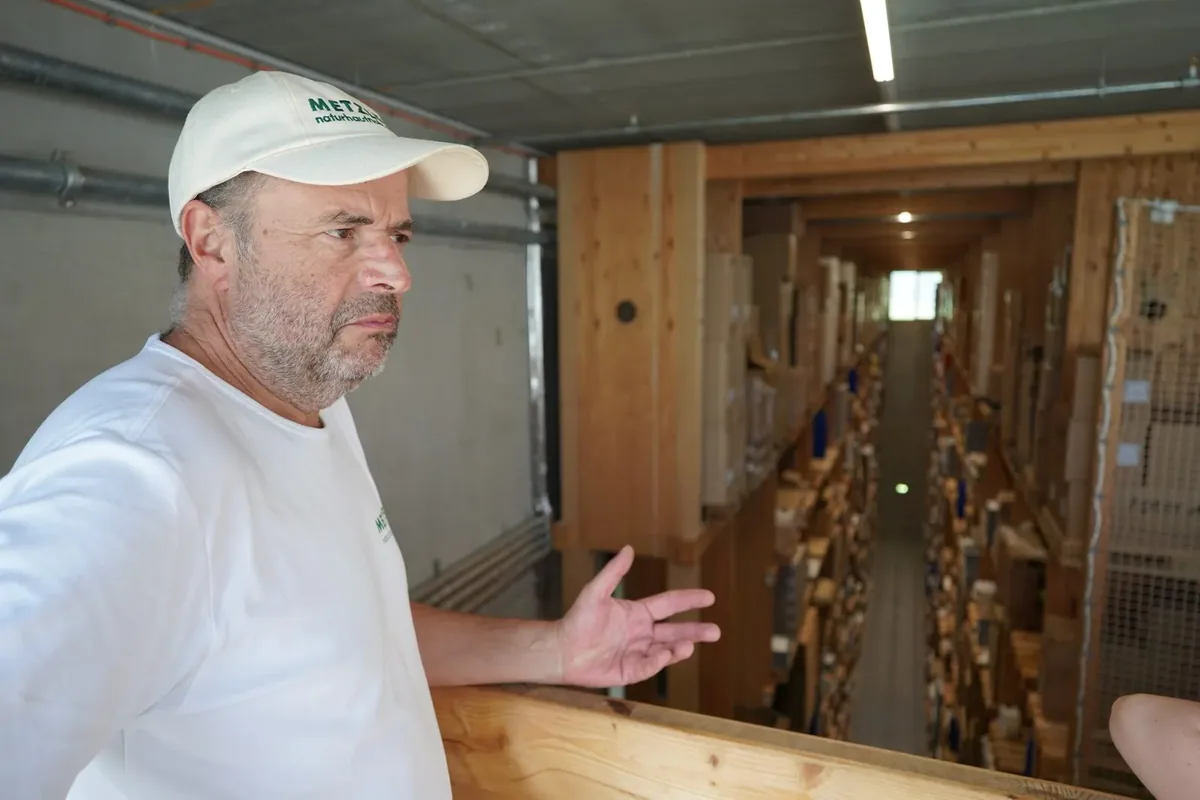
An on-site visit in Vorarlberg. In times of global crises and a trend towards large dairies. Build bigger, or give up the farm altogether? At one point Ingo Metzler considered giving up livestock farming completely. But his boys protested. No animals at all – that would not work, it would not be sustainable. And he experimented with something entirely new, living the transformation.
Listen to this episode
Also on: Spotify · Apple Podcasts · podcast.de
Sustainability, Metzler says, was an issue early on, in the mountains as well as in the valley. After all, you want to throw away as little as possible. “Unfortunately, 1 litre of milk only makes 100 grams of cheese,” Ingo Metzler notes. So where to put the rest, he wondered: “How can that be turned into money too?”
At first, Metzler fed the leftover whey to his own pigs. Until Susanne Kaufmann, owner of a fashionable wellness hotel in neighbouring Bezau, came along with an unconventional idea: “How about processing the whey into foot and hand creams?” The beautician and the farmer tinkered in the farm’s own laboratory on natural products for the skin.
Entrepreneurial genes
Now, twenty years later, the Metzlers and a handful of permanent employees develop and produce cheese and cosmetics right next to each other – in small quantities: “We make a little of many things instead of a lot of a few,” and so the cosmetics cheesemaker defies the laws of the world market. “We keep the entire value chain with us,” Metzler reports confidently.
“We make a little of many things instead of a lot of a few”
Ingo Metzler
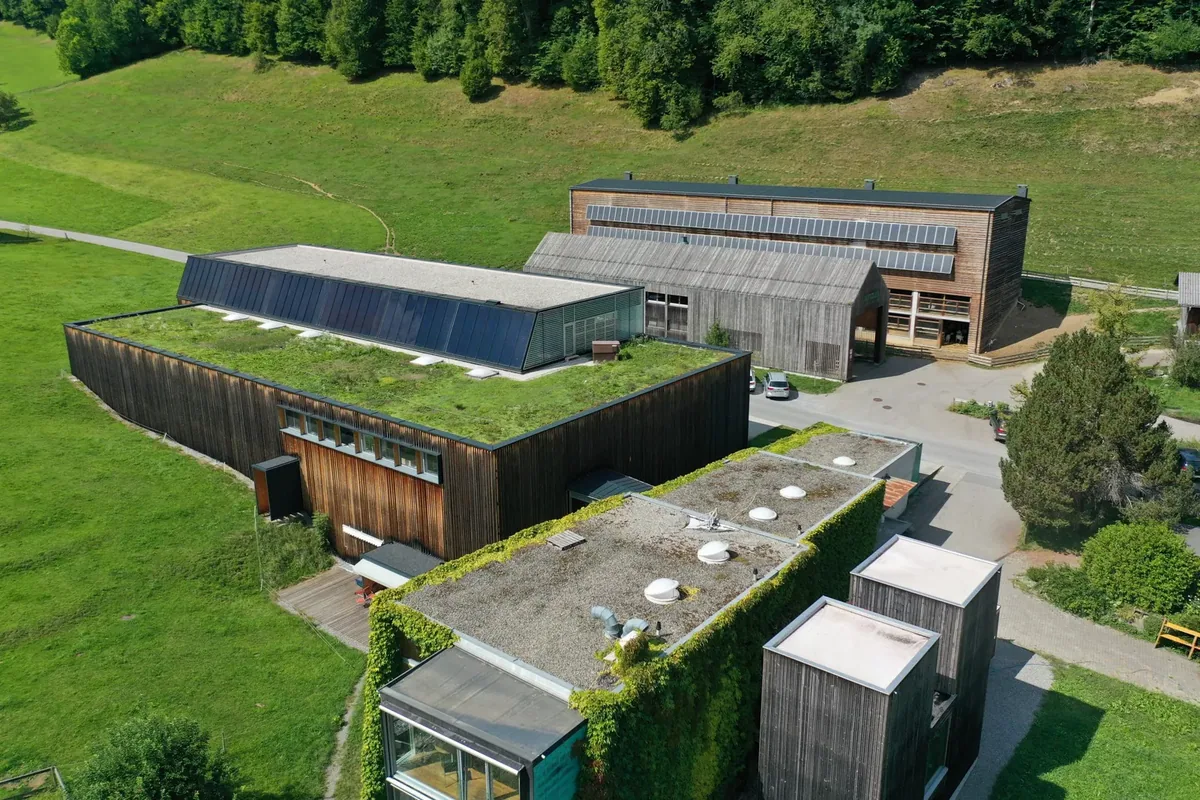
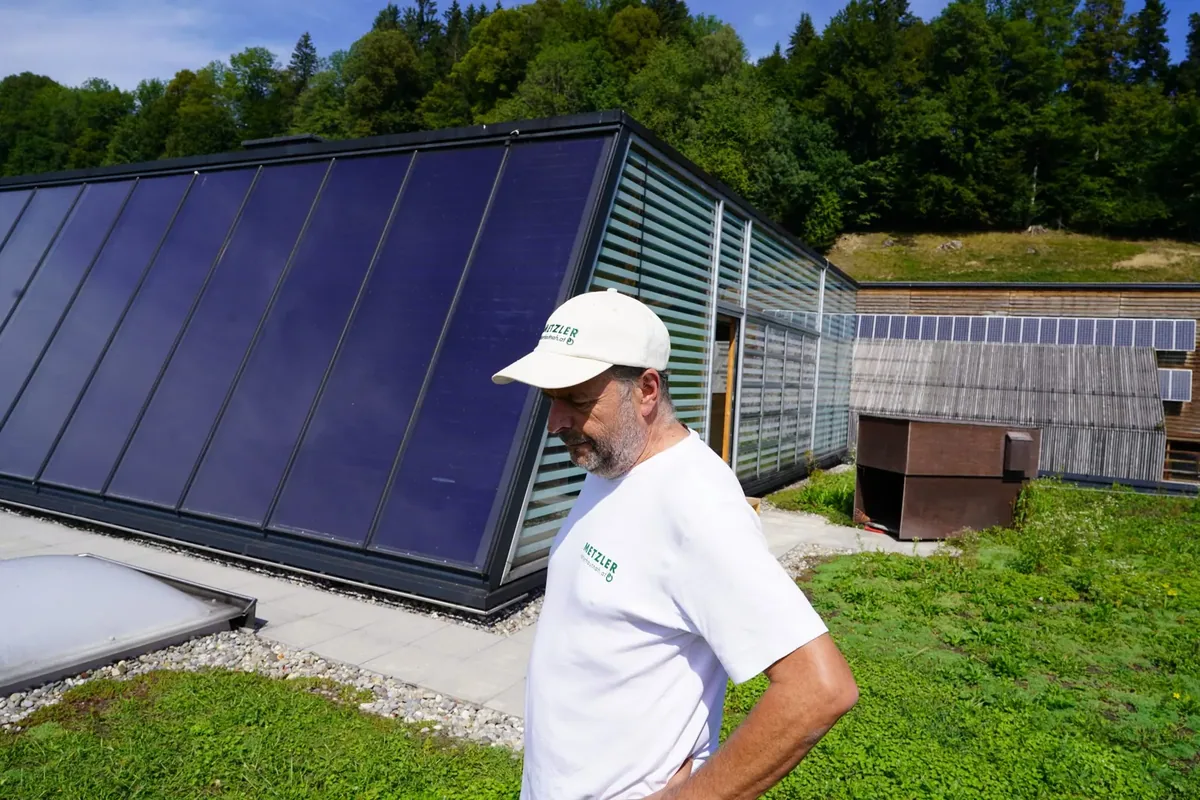
Thanks to geothermal and solar energy, the family business produces more heat and electricity than it needs itself. “Even in the cold season,” Metzler adds. And points his finger past the photovoltaic panels towards the mountains. Hear more:

Photos: Jan Thomas Otte
And here once more is the report in his own words, summarising what Ingo Metzler told us:
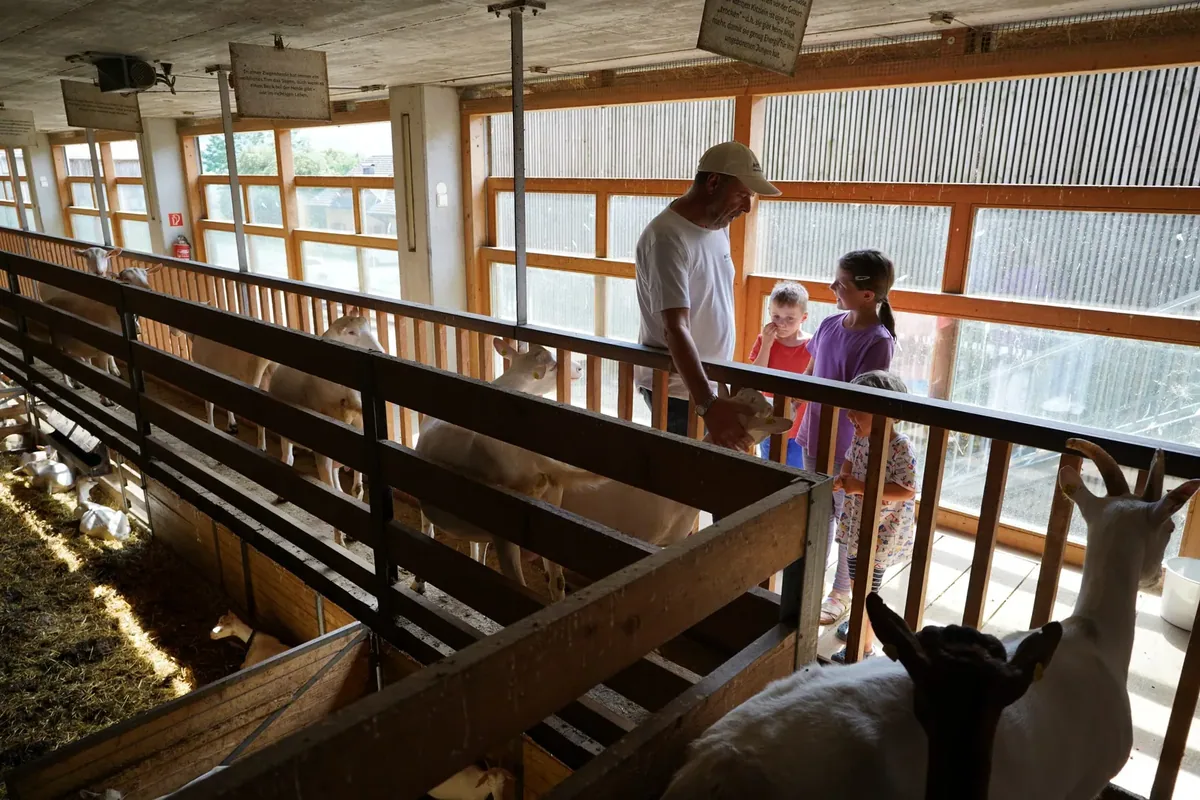
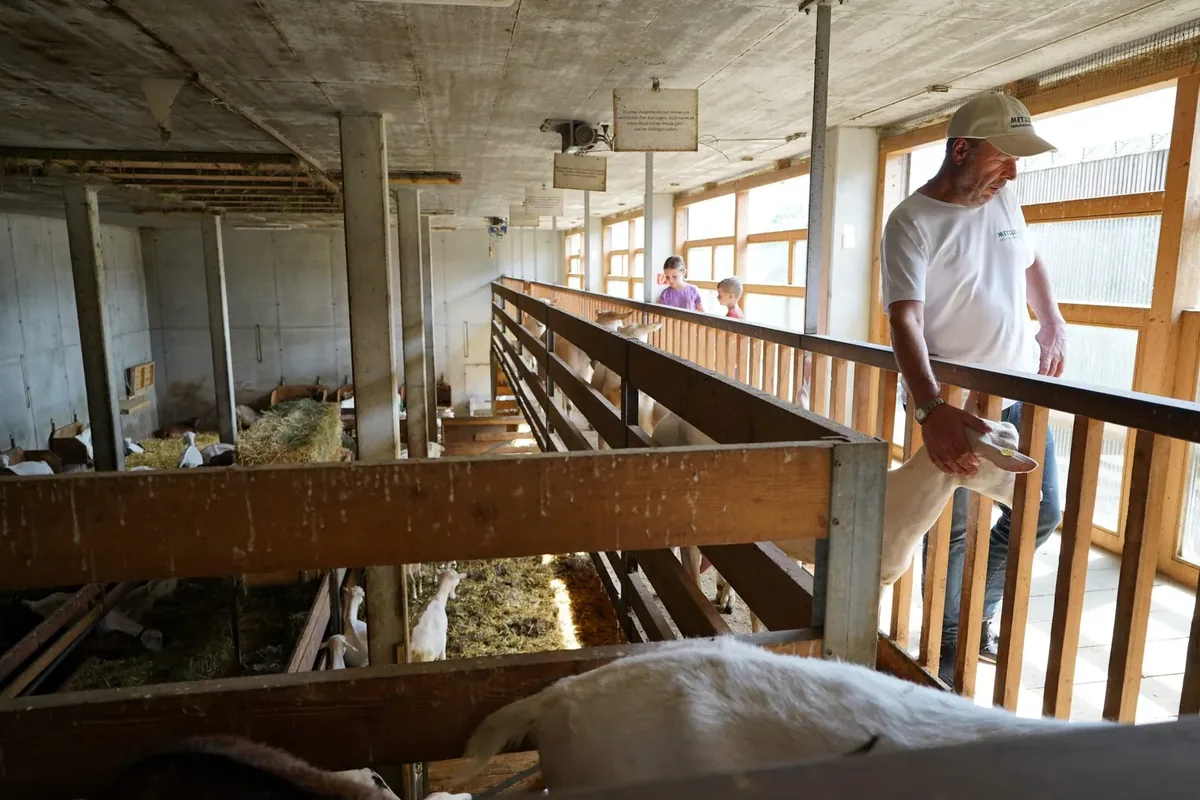
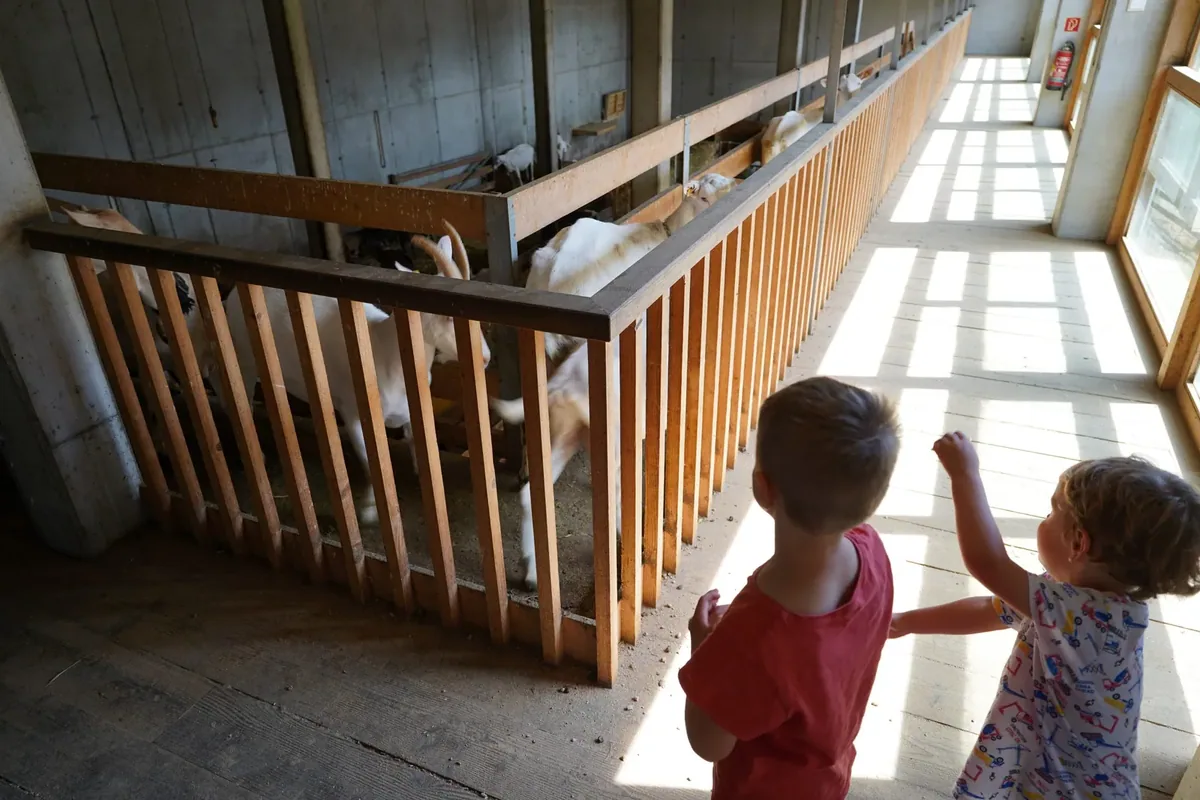
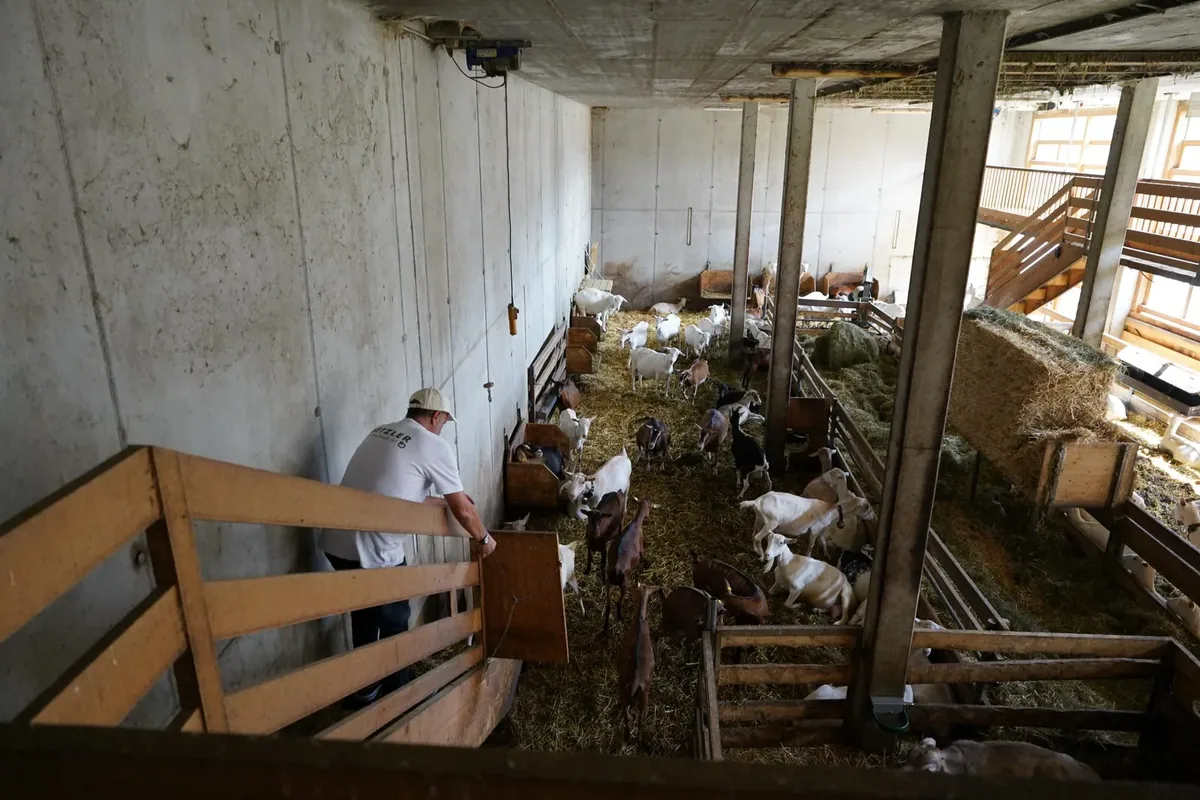
A goat avoids water like the plague. It stays in the barn long before the first raindrop and never goes out onto wet grass voluntarily. Even when it is hot in summer and there is shade in the woods, the goats would gnaw the trees and ruin everything. That is why they spend a lot of time in the barn.
"Hay feeding 3%"
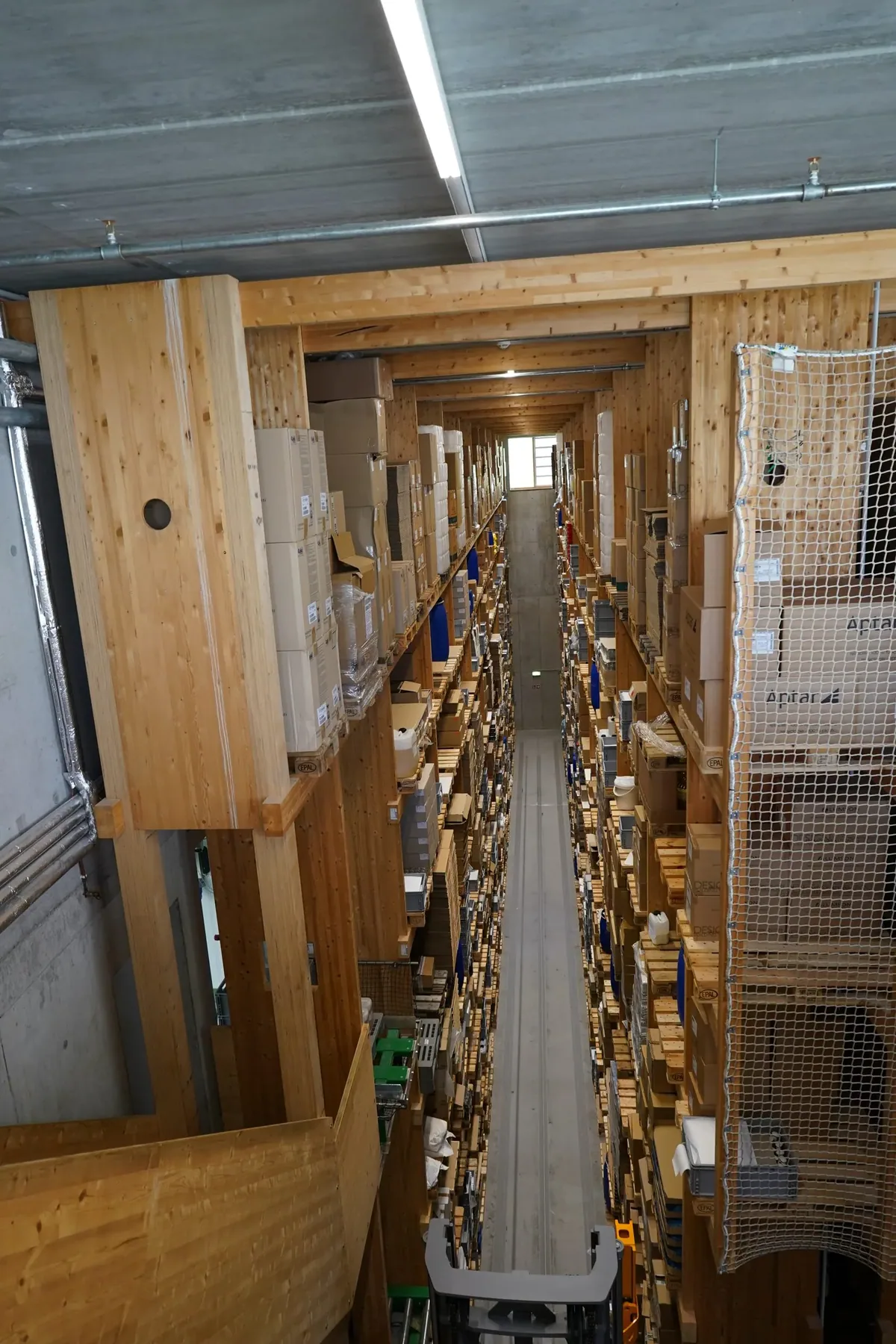
In Europe only about 3% of the milk produced is based on hay feeding, while 97% is based on silage feeding. Animal husbandry, milk production and cheesemaking are subject to EU food law, while cosmetics production and warehouse management take place on the other side of the road. Interestingly, the products you put on your skin are much more strictly regulated and controlled than those you eat. The raw materials for cosmetics production are delivered to a high-bay pallet warehouse, from where they reach production under computer control. The products are mainly shipped directly to end consumers in the German-speaking countries, who can order them online or by phone. The parcel with invoice and payment details is then sent straight to the consumer.
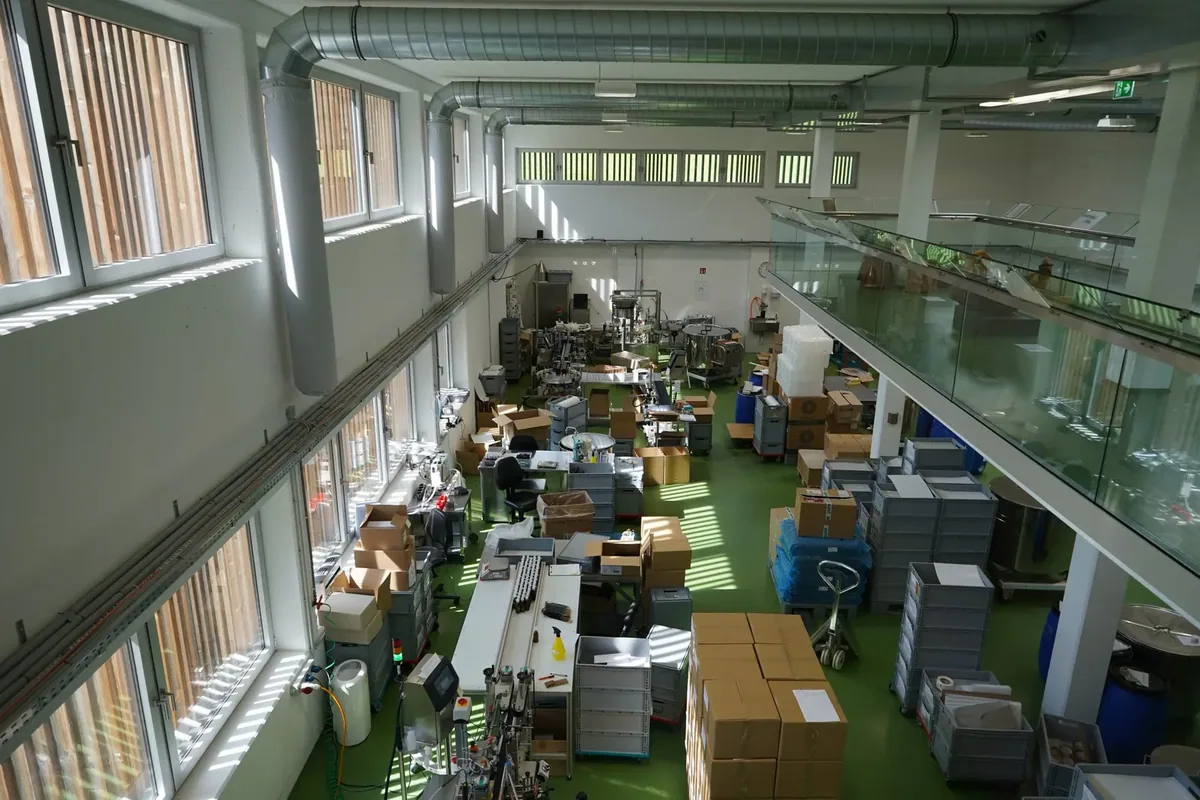
At the back of the facility is the “white area”, where production takes place and special underground ironing systems can be used. Employees have to wear special clothing here instead of their street clothes and pass through a barrier airlock. A total of 400 different cosmetic products are made, not only own brands but also products for other brands. One example is the processing of whey, a by-product of cheesemaking, into cosmetic products.
"Innovation in the lab"
Ingo Metzler
Another example is the cooperation with an organic farm in Styria that produces mare’s milk and had the idea that cosmetic products could also be made from this milk. Originally there were only two products, but soon there were 16 different ones. The mare’s milk is sent to the farm, and the finished products are either sent back to Styria or marketed regionally. An important partnership exists with the Hotel Post in Austria, one of the country’s leading wellness and spa hotels. Another brand produced at the farm and marketed worldwide is the cosmetics line of Susanne Kaufmann, the owner of the Hotel Bosnien.
When you produce animal products yourself, you are constantly challenged to develop new products, carry out quality assurance and guarantee traceability. That also requires a laboratory to meet these requirements. A central issue in production is the warehouse, because you have to be quick and able to deliver. You have to keep all the necessary parts at hand. If you make a face cream in final production and then have to wait 18 weeks for the jar, nobody is interested any more. If you build a high-bay pallet warehouse today, you will fit it out with metal racks. But if you talk about regionality, regional value creation, sustainability, ecological footprint and all these things, can you then use Chinese steel? Probably not, given that supply chains are disrupted globally.
"Steel instead of wood"
Ingo Metzler
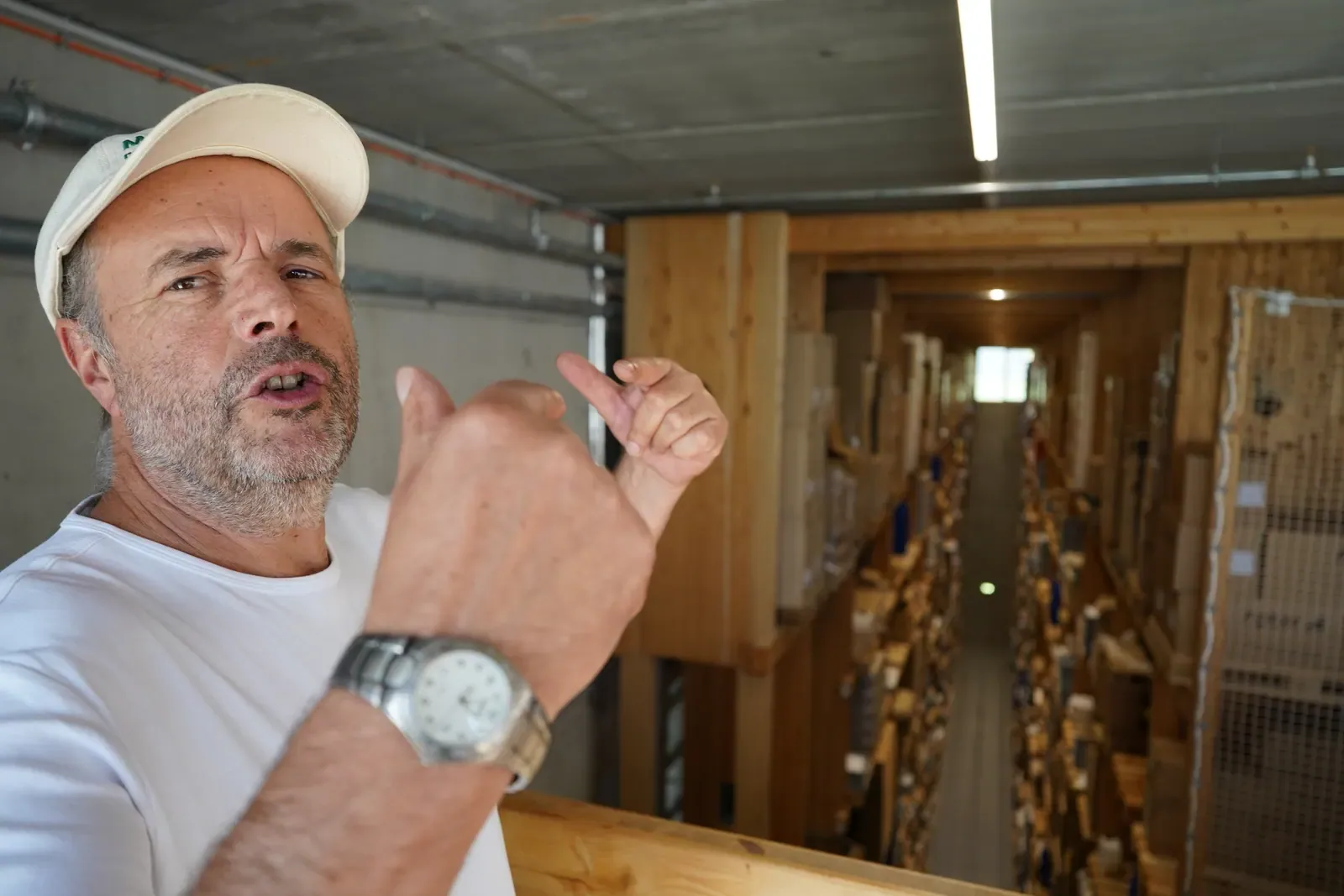
That is why we decided on wood, a local renewable raw material with regional value creation, a different kind of sustainability and a different ecological footprint. We chose wood even though it is at least twice as expensive as steel, even fast-growing spruce. We built a high-bay pallet warehouse in local spruce, constructed by a carpenter just ten kilometres from here. We have 1,100 pallet spaces here, served by a special system unit. The machine stands on the floor, guided by induction and controlled by navigation. Not a single pallet space is numbered or labelled, because only the machine knows where things are. That does not matter either. When regional planning says that 13 metres is out of the question, we have to sink the thing. Our high-bay pallet warehouse is sunk 10 metres into the ground so that it can be placed on the periphery in line with planning rules. That does not make things any easier.
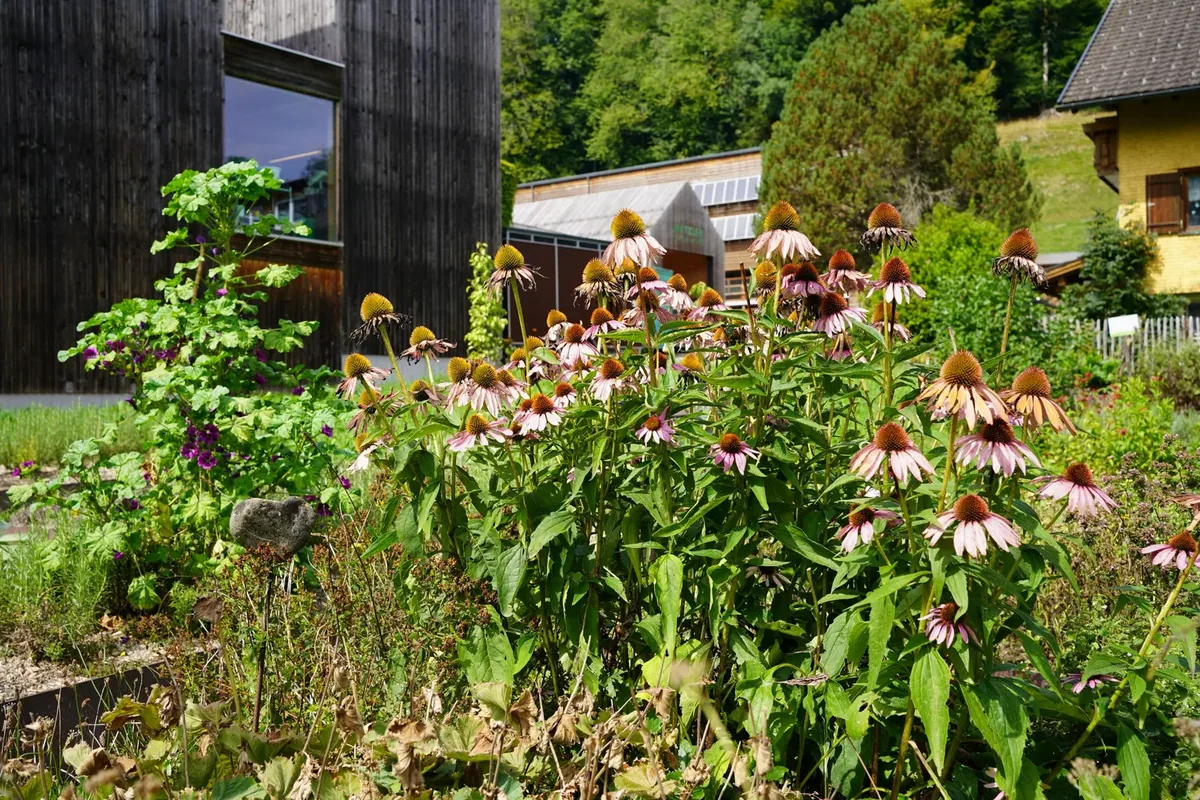
For special production facilities, energy plays a major role. That is not only because there is political unrest in some countries, but also because customers are increasingly interested in the sustainability of our products. We use only natural ingredients in our products and only grow ingredients that bring us joy. But more and more people are also thinking about the energy balance. When we say that we use natural ingredients, they ask: “Okay, but how much CO2 is emitted in production?”
Carbon footprint, climate protection, sustainability
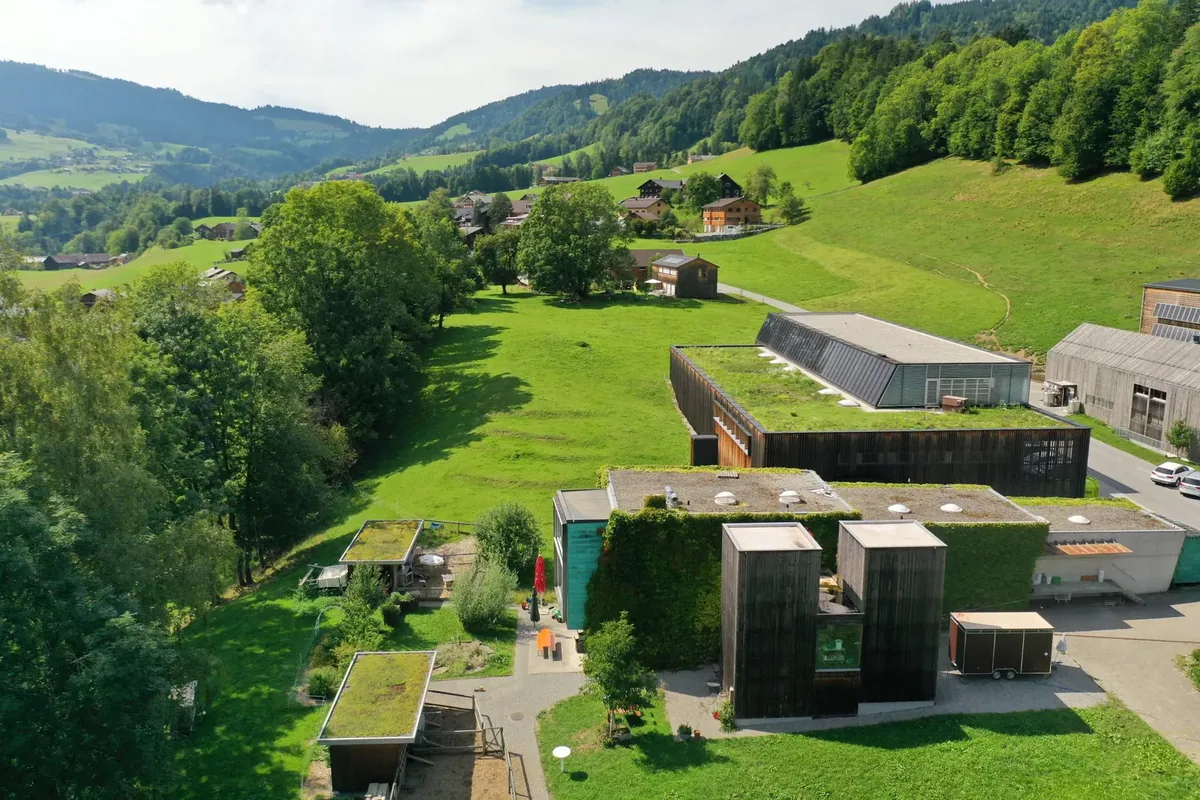
That is why we looked closely at energy and implemented a concept that is so far unique. It concerns thermal energy, that is, space and process heat. We obtain this energy exclusively from the sun. To do so, we built a solar thermal system and created a large gravel store, which is heated up in summer and releases the heat in winter. We only need a little electricity for a small heat pump. Incidentally, we also have our own power supply, which provides more than enough energy for our production. We are not an amusement park, though, and we do not build play equipment for children. With us, the animals play the leading role, which is why we asked our architect to plan species-appropriate housing for our rabbits.
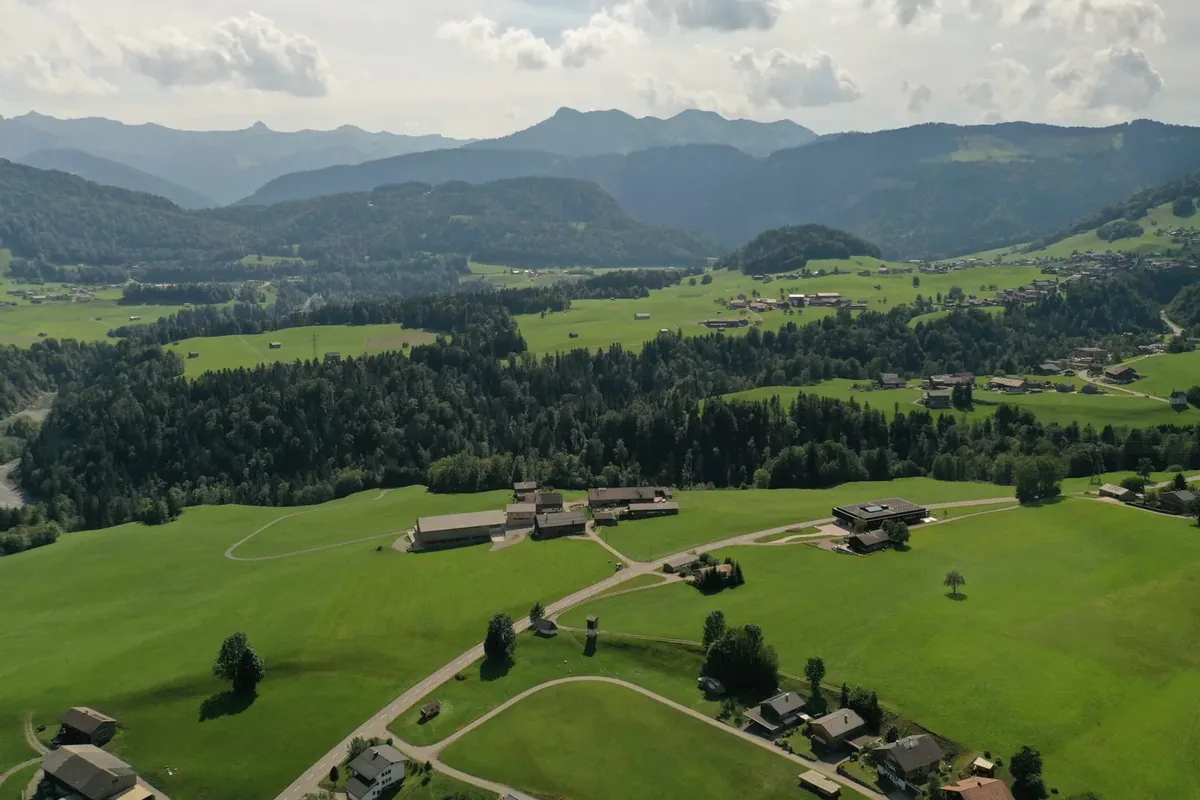
The milk is obtained from the animals outside and cooled in tanks before it goes for processing early in the morning. The cheese dairy has three stations at which three different types of cheese can be made in a variety of shapes. Cheese production starts at four in the morning and lasts until around 12 noon. The mountain cheese needs nine months to mature and requires a lot of deep storage. The Fischwetter cheese dairy is part of the Bregenzerwald Cheese Road, a community of 200 businesses that focus on promoting the production and marketing of various types of cheese. The farm manages 35 hectares of grassland and produces around two and a half thousand litres of milk a day, from which about 30 different types of cheese are made. Processing leaves 90% whey.
It quickly became clear that value creation had to be increased, and the fresh whey offered a promising opportunity. A friend from school had gained a lot of experience in cosmetics production while we experimented with the whey and combined it with the medicinal plants growing around us. We eventually developed a bath additive from the whey, which we initially gave away to relatives. When we were told that some people did not have a bathtub, only a shower, we expanded our range and also developed shower products.
Increasing value creation – but how?
This eventually led us to put up a concrete building in 2000–2001 for processing whey into cosmetics and other products. Because of new EU animal husbandry laws, we had to decide whether to give up livestock farming or invest anew. Since all four of my sons were enthusiastic farmers, giving up livestock farming was unthinkable, so we had to redesign it. Two of my sons were also trained cheesemakers and expanded the cheese range massively. Milk processing also had to be redesigned, as demand in cosmetics had risen sharply. We decided to expand the cosmetics production area and put up a new building.
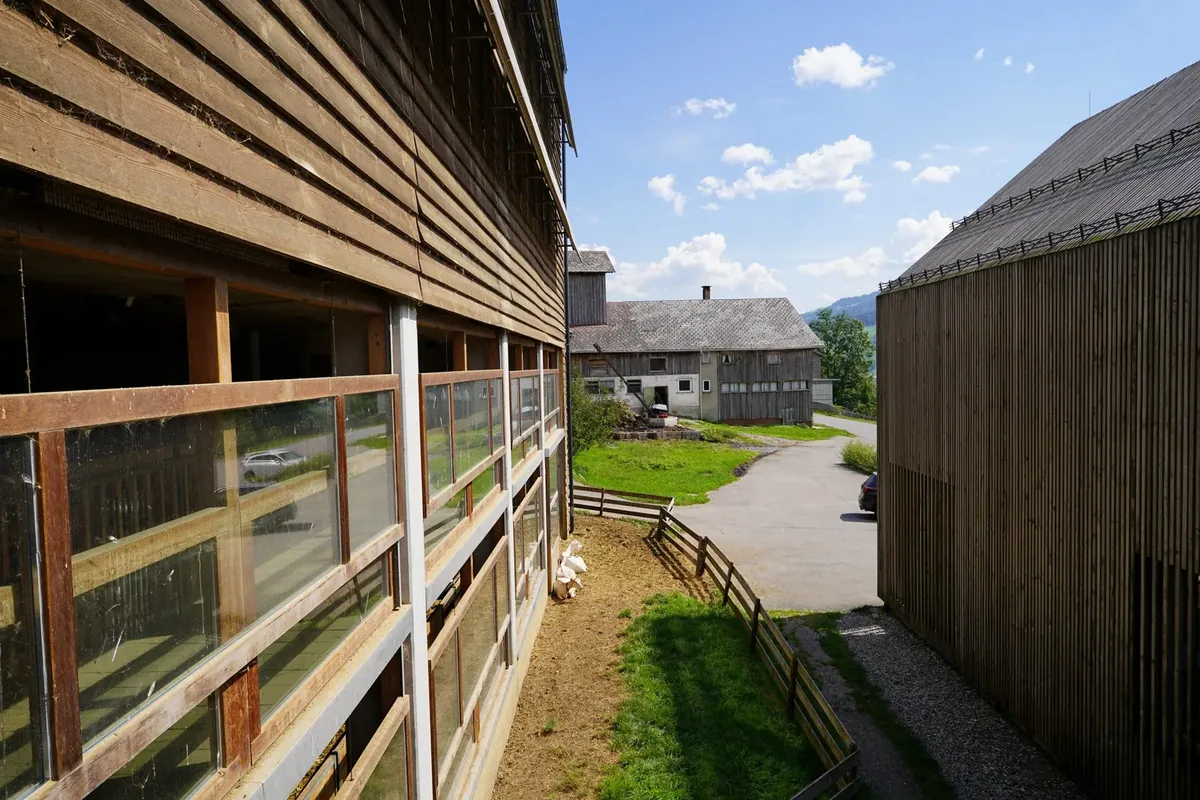
There is now a clear contrast between the goat barn on the left and the laboratory on the right, but both sides are connected and keep developing. Processing, storage and administration on one side, and animal husbandry and milk processing on the other.
Translated from German by Claude. The episode audio is in German. Read the original in German.